We've done it before, from the industrial age to the information age. Now, Britain needs to show it can lead again, this time with optimism at the core. Because the future doesn't arrive, it's imagined, shaped and built. And we need to be the place that people stay and win.
There's a quiet resurgence stirring in Britain. A collective realisation that we don't just need better infrastructure or economic tweaks. We need belief. We need conviction. We need long termism in a short term obsessed society. In short, we need more optimism. Not passive hope or empty boosterism, but active, tech-fuelled, culturally grounded optimism.
It's the belief that progress is possible. That technology is the accelerant for this progress. And that our greatest asset isn't a single invention or policy but the entrepreneurial, creative and cultural, high agency spirit of our people.
A lesson from the brick
In 1958, a small Danish company patented a simple plastic brick. It was colourful, lightweight and unassuming but its potential was limitless. Because the real genius wasn't in the brick itself. It was in the system.
Each piece was designed to interlock with every other. Uniform in dimensions, universal in connection. Suddenly, children (and adults) weren't just recipients of toys, they were architects of worlds. With just a handful of parts, anyone could build something meaningful: castles, spaceships, cities, dreams.
The Lego brick became more than a toy. It became a symbol of possibility. Of creativity scaled. Of small tools enabling big imagination.
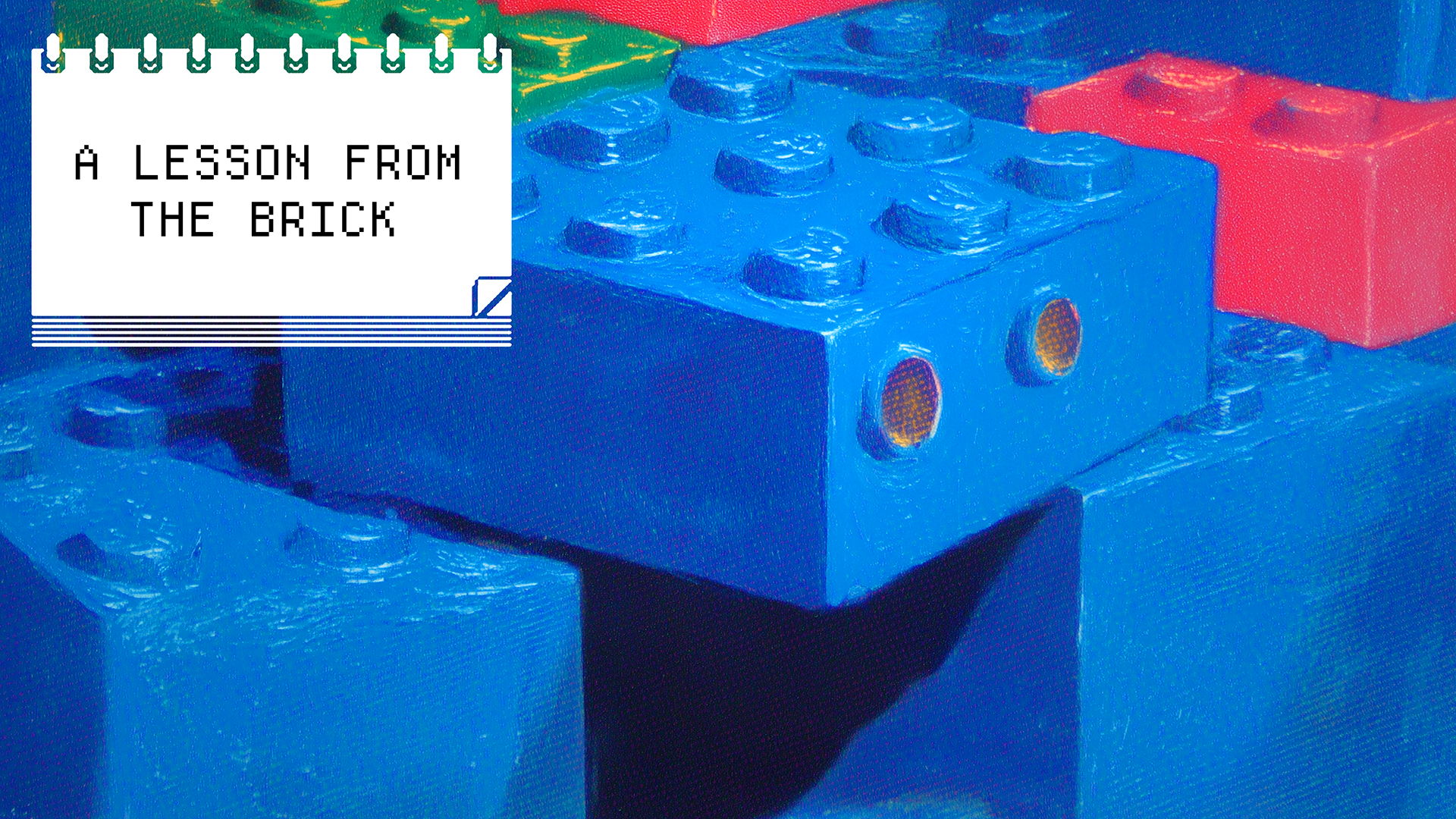
And that's what we need now, not just policy tweaks, but systems that empower assembly. Tools that invite participation. Frameworks that give people the building blocks to shape the future themselves.
Because belief doesn't always begin with a manifesto or a mission statement. Sometimes, it begins with the offer of a piece, a simple, modular part that says: you can build with this.
Installing optimism
We are living through an era shaped by overlapping crises, climate breakdown, economic volatility, geopolitical conflict and mounting anxiety over the future of artificial intelligence. But in this moment, the most powerful operating system isn't technological. It's psychological. The prevailing mindset shaping our actions, institutions and ambitions is not hope or progress, it is fear.
Fear of loss. Fear of change. Fear of what comes next.
And yet fear, while understandable, is a poor guide for invention. It narrows our perspective, pulling focus away from possibility and pushing us toward protectionism. It favours caution over creativity, preserving the status quo instead of encouraging transformation. As a result, we've developed an extraordinary capacity to identify and analyse problems, but in doing so, we've neglected our ability to imagine, and to build better solutions.
But what if we chose to install a different kind of operating system? Not one based on naive optimism or empty positivity, but a deliberate, strategic belief in progress. An optimism that acknowledges the cracks in the world and still dares to see them as places where light might enter. A mindset that combines realism with imagination.
This would be more than just a mental shift, it would be a full-system upgrade. A framework for moving forward with clarity, courage and curiosity. A cultural software update for those who are ready to shape what comes next.
Because around the world, the future is being reconfigured in real-time, driven by breakthroughs in intelligence, energy, infrastructure and networks. The nations that move with speed, belief and a clear sense of purpose will shape this future. Those that hesitate will merely follow.
It's time to choose which of those we want to be. Let's lead.
Reframing optimism: realism meets imagination
Let's be clear: optimism is not the same as naivety. It's not about pretending that everything is fine, nor is it a denial of pain, difficulty, or complexity. True optimism is far more demanding than that. It is a choice, a deliberate, daily act of belief that progress is not only possible, but worth pursuing.
It's the decision to direct your energy toward shaping a better future, even when the odds seem uncertain.
Optimism isn't a soft sentiment. It's pragmatic. It moves things forward. It's the fuel behind invention, the spark that drives risk-taking and the courage that underpins creative breakthroughs. Without it, some of humanity's greatest achievements would never have happened. There would be no moon landings. No internet. No vaccines or life-saving medicines.
It was optimism that built the National Health Service - a bold act of social imagination. It was optimism that inspired the World Wide Web - a vision for global connection that began in the UK. It is optimism that continues to drive the scientists, technologists and entrepreneurs working at the edge of what's possible: from clean energy and synthetic biology to quantum computing and generative AI.

In the world of technology, optimism is the hidden engine behind momentum. It's the belief that lets us start building neural networks before they fully work. It's what allows us to ship products before they're perfect, and to explore new markets before they know what they need.
Far from being the opposite of realism, optimism is what happens when realism meets imagination. It acknowledges the facts of the present and still chooses to act. To build. To create. To innovate.
And yet, here in Britain, that engine has begun to stall. Not for lack of talent or tools, but for lack of belief.
It's time to restart it.
Britain's moment of reckoning
At this moment in history, the world is not crying out for marginal efficiency gains or minor optimisations. It is calling for something deeper and more human: belief. In the face of uncertainty, rapid technological change and global instability, what we need isn't just sharper tools, but a stronger sense of direction and long termism. And that's why optimism can no longer be treated as a luxury or an optional mindset. It's a leadership imperative.
In Britain, we are long overdue for a new national narrative, one that shifts the conversation away from decline, and toward a story of regeneration. We are a country that has always punched above its weight culturally, creatively and intellectually. Our legacy of invention spans everything from the steam engine to the world wide web. Today, we have a generation of builders - creatives, technologists, scientists, entrepreneurs who are hungry for something new, and ready to contribute to what comes next.
The world is watching. International investors, founders and partners are looking for signs of British resurgence, eager to see whether this island can once again be a launchpad for global ideas. In that context, strategic optimism might just be one of our most powerful exports.
In the realm of technology, we are not merely building tools. We are shaping the next hundred years. Fields such as artificial intelligence, synthetic media, neurotechnology and bioengineering are not just industries, they are civilisation-shaping forces. And these forces demand more than just technical proficiency or regulatory oversight. They demand belief. They require optimism, not as surface-level positivity, but as guiding principle.
Because if we approach these emerging technologies from a place of fear, we will build walls, literal and metaphorical. We'll regulate to contain rather than unlock. We'll talk only of threats and never of potential. But if we approach them from a place of hope, we build bridges. We connect people, ideas and ambitions. We expand what's possible.
More broadly, across culture, the loudest voices too often belong to the most cynical. Doom scrolling dominates our feeds. Outrage has become a kind of performance art. It's become less about being right and more about being sensationalist, driving clicks, eyeballs and X payments as a result. And yet, beneath that noise, there's a growing undercurrent: a rising tide of people, particularly among younger generations, who are hungry for something more meaningful than pessimism.
They want leaders who build, not just warn.
Brands that shape the future, not just comment on it.
Artists and thinkers who don't merely critique the now but actively design what comes next.
This is Britain's opportunity. The question is whether we will seize it.
Britain's confidence gap
Every month, another promising UK startup boards a flight to SF or NYC, not out of a desire to abandon home, but because they believe they have no other choice. They aren't leaving because they want to; they're leaving because they've hit a ceiling.
In the UK, capital is often risk-averse, cautious in the face of bold ideas. Policy support, while well-meaning, is fragmented and inconsistent. Founders attempting to scale encounter a landscape that feels like a closed loop, difficult to navigate, slow to reward ambition and often allergic to uncertainty.
Perhaps most worryingly, optimism itself is treated with suspicion. To be hopeful is to be seen as naive. To take a big bet is often met not with encouragement, but with scepticism.
And so, they leave. Not to escape Britain, but to find somewhere their ambition feels welcome. They go where capital is willing to take risks, where ideas are met with curiosity rather than caution. They enter ecosystems where the first question is not "how will this fail?" but "what if this works?"
What we're witnessing isn't just the loss of a few companies. It's something deeper and more systemic. We aren't just losing startups.
We're outsourcing ambition.
What happens if we don't believe
The Centre for British Progress is right to sound the alarm: stagnation doesn't simply harm the economy, it erodes our collective sense of possibility. When a society stalls, the impact goes far beyond GDP or investment figures. It constrains imagination. It limits ambition. It sends a subtle but powerful message to its people that the future is something to be endured, not shaped.
In a stagnant environment, talent becomes boxed in. People with bold ideas feel pressure to play it safe. Work becomes purely transactional, a means of survival rather than a source of purpose. Innovation, once celebrated, starts to feel dangerous or indulgent. And a whole generation begins to internalise the idea that dreaming too big is not just unrealistic, but an unwelcome distraction.
But none of this is inevitable. Stagnation is not a law of nature, it is a choice, often made through inaction or fear.
If the only visible paths to prosperity are authoritarian control or extractive capitalism, then it is up to Britain to imagine and forge a third way: a path that embraces openness, creativity, curiosity, culture and the transformative power of technology. A path rooted not in nostalgia or narrow protectionism, but in belief. Belief in progress, in potential and in our ability to build a future that is fairer, bolder and more inspiring than the present.
That is the challenge. And also the opportunity.
A crisis of confidence
Britain is facing a crisis, not just of capital, but of confidence. In 2024, UK startups raised just £16.2bn in venture funding, a stark return to pandemic-era lows and the weakest level of investment since 2020, according to Dealroom.
Meanwhile, across the pond, Silicon Valley saw over £65bn raised in the same period, a staggering 71% year-on-year increase. The contrast couldn't be sharper, and the implications couldn't be clearer. While the UK ecosystem stalls, others are accelerating.
The shift isn't just financial, it's geographic. More than 70 UK-founded, VC-backed startups are now headquartered in the United States. And for the first time in over a decade, the majority of global venture capital, more than 57%, went to US companies. In contrast, a mere 4.8% of global VC flowed into UK firms.
These numbers tell a deeper story. They reveal a growing divide not just in access to capital, but in the atmosphere of ambition. While founders in the US are surrounded by people and systems built to scale belief, UK founders often find themselves grappling with policy uncertainty, risk-averse investors and structural limitations that make it harder to dream, and harder still to stay.
From capital gains tax disincentives to inconsistent tech visa frameworks and outdated pension regulations, the UK is failing to match its policy infrastructure with the long-term belief needed to support high-growth, globally-minded companies.
But this is more than a policy shortfall. It's a signal problem. And increasingly, a talent drain.
As Barney Hussey-Yeo, founder of Cleo, put it bluntly: "You get to a certain size where there is no capital in the UK and the problem is getting worse."
What we're seeing isn't just underinvestment. It's under-confidence. And unless we address it, we risk not just slowing innovation - but exporting it entirely.
Britain's creative DNA and technological future
Yet amidst this growing crisis of confidence, this erosion of belief in our ability to build and scale world-class innovation, we are overlooking one of our most powerful and under-leveraged assets: Britain's cultural creativity.
From the heritage of Burberry and the subversion of Banksy, to the icon of James Bond, the soundscapes of David Bowie and the storytelling power of the BBC, the UK has consistently punched far above its weight in shaping the global imagination. Our advertising agencies have produced some of the most iconic brand campaigns in history, from AMV with the Guinness Surfer, Wiedens with the Honda Cog and Nike Nothing Beats a Londoner.
Our media and publishing industries have long set international standards with Penguin Books, The Economist, the BBC, Channel 4 and more.
And our art schools, music scenes, galleries and satirical voices have shaped not just national identity, but global cultural taste with everyone from Hirst to Hockney, McQueen to McCartney. Stormzy to Skepta and The Who to The Tate.
This creative DNA isn't just part of our past, it's essential to our future. And it should be seen not as a separate realm from technology, but as integral to its development and success.
Because building great tech isn't just about code, infrastructure or hardware. It's about people. It's about emotion. It's about connection. And to do that well, we don't just need engineers and data scientists, we need narrators, culture-makers, interface designers and experience architects.
Brand creative is not a nice-to-have. It is infrastructure for attention. It is how products come alive in the minds of users. It is how trust is built, how movements are sparked, how technology finds a human home. And Britain excels at it.
If we can channel that cultural confidence into our innovation mindset, if we stop separating creativity from capability, we can build technology that doesn't just function but resonates. That doesn't just scale, but inspires.
Because creativity is not just a British export. It is an accelerant. A competitive advantage. A secret weapon. One we'd be foolish not to wield as we shape what comes next.
Builders are already building
Despite the prevailing mood of decline, and the headlines that so often dwell on what's not working, the truth is that the future is already being built, right here in Britain. Across AI, fintech, clean energy and biotechnology, a new generation of UK-born companies are confidently making global waves.
This isn't hypothetical. Optimism isn't a theory. It's already happening.
Take Zilch, which became the UK's fastest-ever unicorn, reshaping how consumers access credit with a London-built solution that blends financial innovation with user-first design.
DeepMind, one of the world's leading artificial intelligence research labs, continues to push the boundaries of what's possible in AI, all from a base in the UK. Its breakthroughs are influencing everything from medicine to protein folding to the future of intelligence itself.
Synthesia, the AI video generation platform, hit $100m in annual recurring revenue in 2024 and secured major backing from Adobe, proof that UK AI startups can scale and attract strategic global investment.
StabilityAI, the force behind open-source breakthroughs like Stable Diffusion, has helped spark a global movement around transparent, decentralised AI development, further cementing Britain's role in shaping the future of open technology.
In clean energy, Octopus Energy is reinventing how we generate, use and distribute power, leading with innovation, data and relentless customer focus.
Wayve, a company pioneering AI-native autonomous driving, raised $1bn in 2024 to scale next-generation mobility solutions from the UK outwards.
And Revolut, now valued at $33bn and serving more than 35 million users globally, continues to redefine what modern banking looks like, all while operating from its London headquarters.
These aren't just isolated success stories. They are evidence that globally relevant, high-impact companies can still be built and scaled from the UK.
The talent is here. The ambition is here. The infrastructure, increasingly, is here too.
What's missing isn't capability. It's confidence. It's coordination. It's a national belief system that recognises these builders not as exceptions, but as examples of what's possible.
What unites these companies isn't just technical excellence. It's belief. A shared sense that the best is still to come, and that building is the highest form of optimism.
These companies are today's Lego sets, assembled in motion, not mailed from the past. Each one clicks into the larger story of what's possible. Deliberate and bold, they signal to the world: belief still builds here.
It's time we built belief around them.
Optimism is a force multiplier
Optimism isn't just a mood or a marketing message. It's not a fleeting feeling or a vague sense of positivity. It's a decision, a conscious commitment to move forward, to build, to create, even when progress feels slow or uncertain. It's a posture, not a platitude. And when placed in the hands of technologists, entrepreneurs and creatives, optimism becomes something more than a mindset, it becomes a force multiplier.
It amplifies intent. It accelerates invention. It turns early-stage ideas into scalable realities.
You can see it in the AI tools that are reimagining education, making learning more personalised, more accessible and more engaging for students around the world.
You can feel it in the climate startups redesigning the energy grid from the ground up, refusing to accept that sustainability must come at the cost of innovation.
You see it in the new generation of creators who are not just entertaining but rethinking work, ownership and economic models, leveraging technology to build careers on their own terms and empower others to do the same.
This kind of progress doesn't begin with concrete and steel. It begins with something far less tangible but infinitely more powerful: Belief. Confidence. Momentum. Optimism.
Belief that things can be different.
Belief that better is possible.
Belief that building will deliver outsized returns.
Belief that the future can be positively shaped.
The Optimist's Operating System: 10 Core Beliefs
- Optimism is a skill It's not naive, it's earned. Optimism requires practice, perspective and pattern recognition. It sees possibility in complexity and progress in persistence.
- Better is possible Cynicism is easy and progress isn't guaranteed, but it is achievable. Britain's past teaches us that transformation is within reach, when belief becomes action.
- Future literacy is essential If we can't imagine the future, we can't build it. We need founders and leaders who can accessibly speak the language of today and tomorrow: AI, biotech, networked systems, creativity and climate science with both curiosity and competence.
- Optimism = realism + imagination Real optimism sees the challenges clearly, but chooses to act anyway. With bold ideas, grounded ambition and cultural confidence.
- Creativity builds culture Every idea shared, every story told, every product launched helps define what we value and where we're going.
- Optimism is tribal Optimistic people cluster. They build things, start movements and shape culture. A new generation of builders is already emerging in Britain - and they're finding each other.
- The loudest voices aren't always the wisest Signal > noise. We need calm yet curious thinkers, slow builders and long-view storytellers, not just hot takes and hype. Optimism thrives where depth outpaces noise. Wisdom whispers; hype shouts.
- Progress is iterative Big change comes from small steps. Innovation doesn't require a breakthrough moment, it demands daily belief and collective momentum. The future is forged one experiment, one failure and one version at a time.
- Confidence compounds Each act of progress whether it's a prototype, a podcast or a pilot builds belief and moves things forward. When we back ourselves, others do too. And momentum builds.
- The future is still to be written Nothing is fixed. There's still time to change the ending. Our next act will be built by optimists: founders, artists, educators, technologists and dreamers who believe we're capable of more.
The texture of optimism
Andrew Bennett recently observed that the futures imagined by techno-optimists often look like "brushed steel, dimpled concrete, and muted glass" surfaces that are sleek, intelligent and efficient, but also sterile, silent and soulless. These visions, though technically impressive, often feel more like renderings than realities. They are clean, but cold. Functional, but flat.
Optimism should feel different.
It shouldn't be wrapped in hard-edged minimalism or corporate futurism. It should have texture, something you can feel in your hands and your gut. It should be sensory and emotional, not just scalable. It should live in the everyday, the messy, warm, colourful, improvisational moments that make life worth designing for.
Optimism shouldn't be something that floats above us in silicon and slogans. It should be grounded. In our stories, our communities, our public spaces, our rituals. It should carry the energy of human intention. The awkwardness of experimentation. The positivity of 'what if'. The vibrancy of culture.
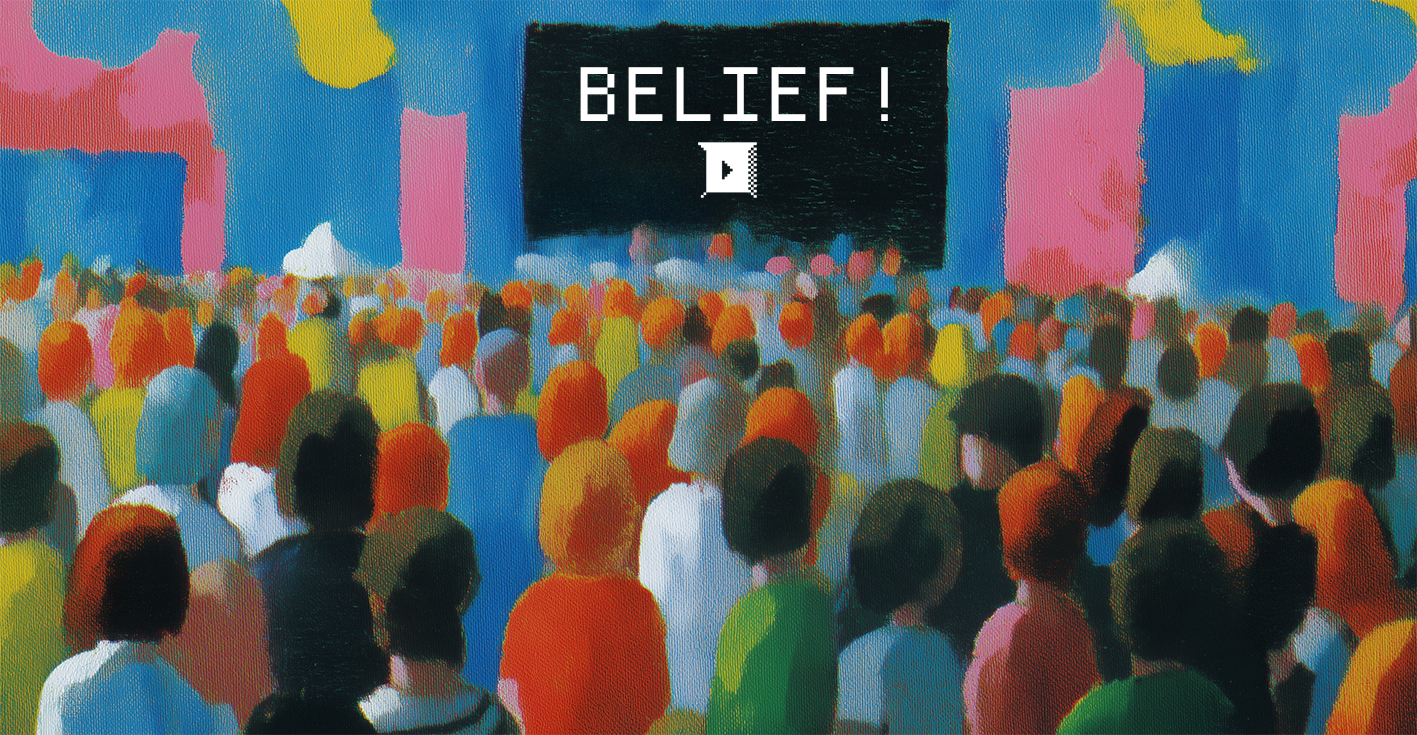
We don't need futures that feel like airports. We need futures that feel like parks, like festivals, like entertainment venues. Places that invite participation. That surprise and nourish. That reflect not just our technical capability, but interests and taste.
Because this isn't just about efficiency. It's not about reducing friction or maximising output at all costs. This is about reimagining how we build tools, systems and societies with people at the centre.
The future shouldn't feel like a machine. It should feel like home.
That's what optimism, properly designed, looks like. Not just a path forward, but a place you want to live in.
Systems that empower
The best technologies today share the same lesson as the LEGO brick. From open-source models to modular finance, from decentralised protocols to open AI frameworks, the future is being built block by block.
These tools don't just scale, they invite. They don't just function, they unlock.
That's what we need more of. Systems that encourage experimentation. Infrastructure that invites imagination. Visible, intentional signals that say to builders, dreamers and innovators: this country is with you.
Because optimism, properly designed, is not a surface-level emotion. It's a foundation. A strategy. A signal.
The future doesn't need more stacked features or top-down control. It needs creative permission.
It needs belief, assembled, piece by piece.
A call to the believers
This is a call to those who still believe.
To those who haven't let cynicism win.
To those who see cracks in the system - and build anyway.
If you're a founder, don't just build, build louder. Share your vision, not just your pitch deck. Let others see what you're imagining, even before it's real. Be vocal. Be visible. Belief compounds when it's made public.
If you're an investor, also back later and braver. Capital is not just a financial tool - it's a signal. It tells the world what's worth taking seriously. Fund the ambitious, not just the obvious. Reward people solving hard, meaningful problems.
If you're in media, tell different stories. Spotlight the builders, not just the drama. Give airtime to the quiet progress, not just the loudest takes. Create cultural space for belief to grow, and make optimism as newsworthy as outrage.
If you're in policy, create oxygen, not red tape. Make it easier to start, to stay and to scale. Build systems that favour experimentation over perfection. Turn government into a platform for progress - not just a process for permission.
If you're in education, teach agency. Teach initiative. Teach the value of taking a leap, not just passing a test. Help students see themselves as future builders, creators and contributors - not just compliant professionals.
If you're in tech, stay. Scale here. Shape what comes next, not from elsewhere, but from within. The gravitational pull of Silicon Valley is real, but so is the opportunity to build a future from the ground up right here.
Because the UK doesn't have to be a launchpad for somewhere else.
It doesn't have to be a stepping stone to success abroad.
It can be the destination.
A place where ideas begin and grow.
Where creativity meets capital.
Where talent stays.
Where optimism lives.
This is a call to the believers:
The ones who see possibility in the cracks.
The ones who choose to build with hope, not just hustle.
The ones who know the future is still up for grabs.
Let's make sure we're the ones who build it.