Subscribe to
Everyone
When every person became a product, and every product became a monthly fee
I subscribed to a writer's Substack today. A few pounds a month. A gesture of support for someone whose work I genuinely admire.
"Get a discount on other Substacks"
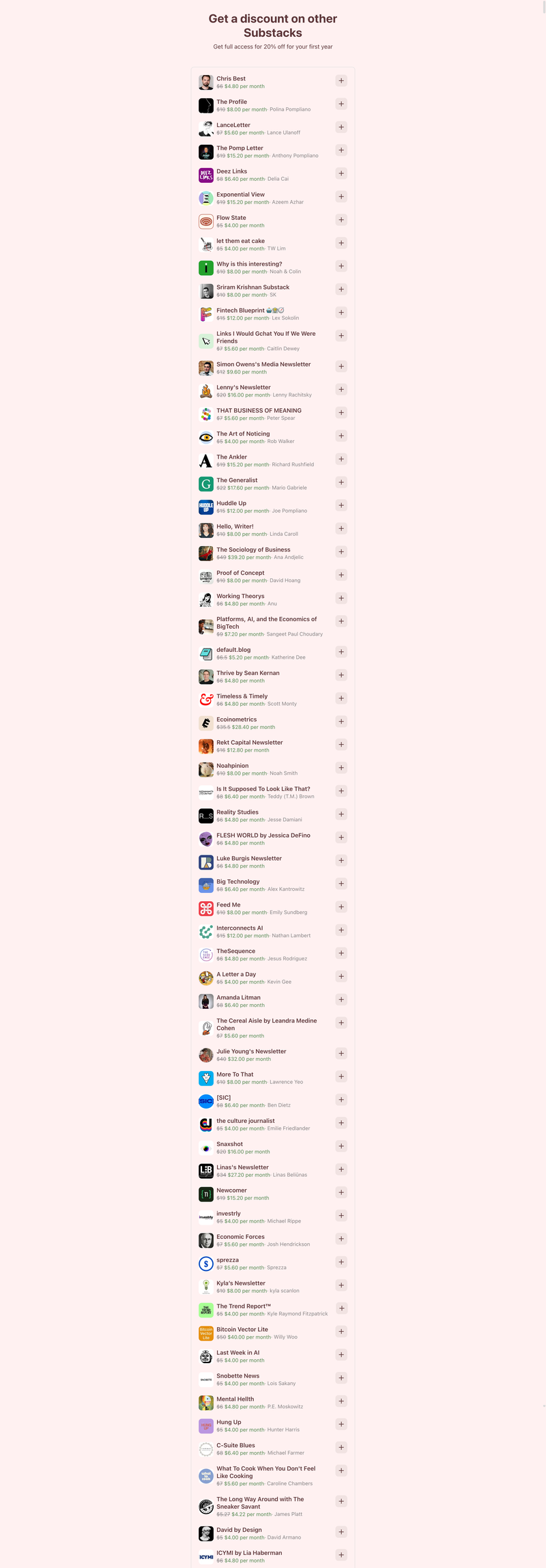
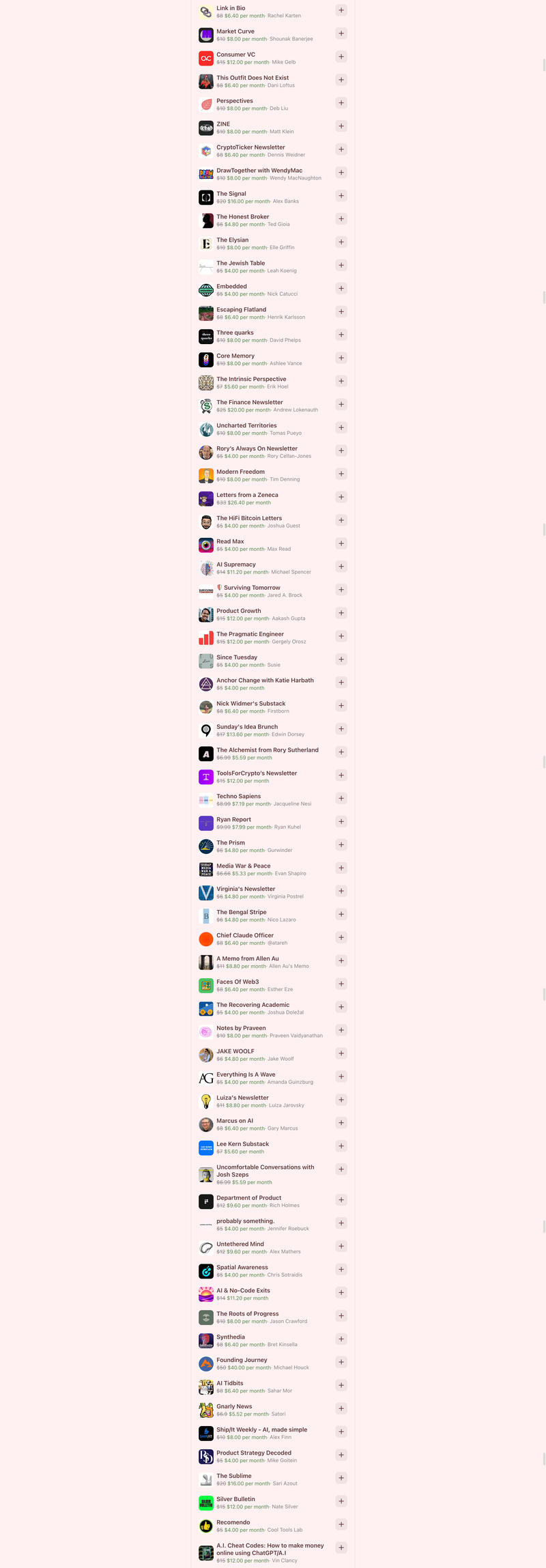
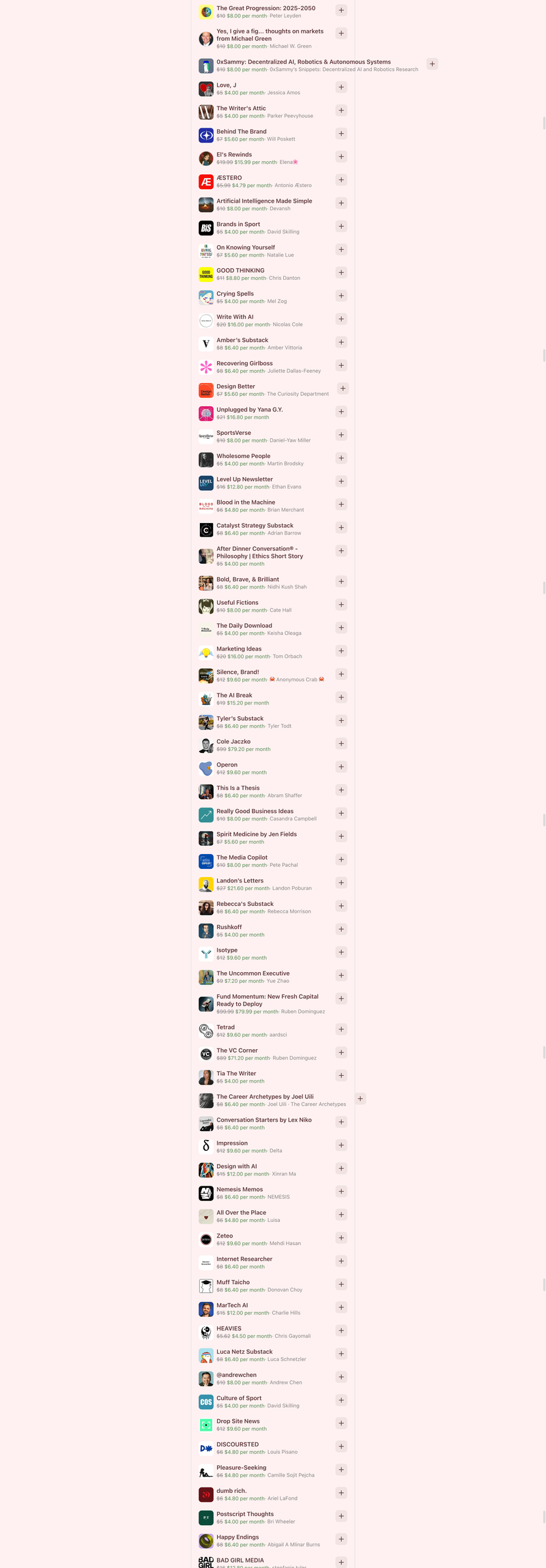
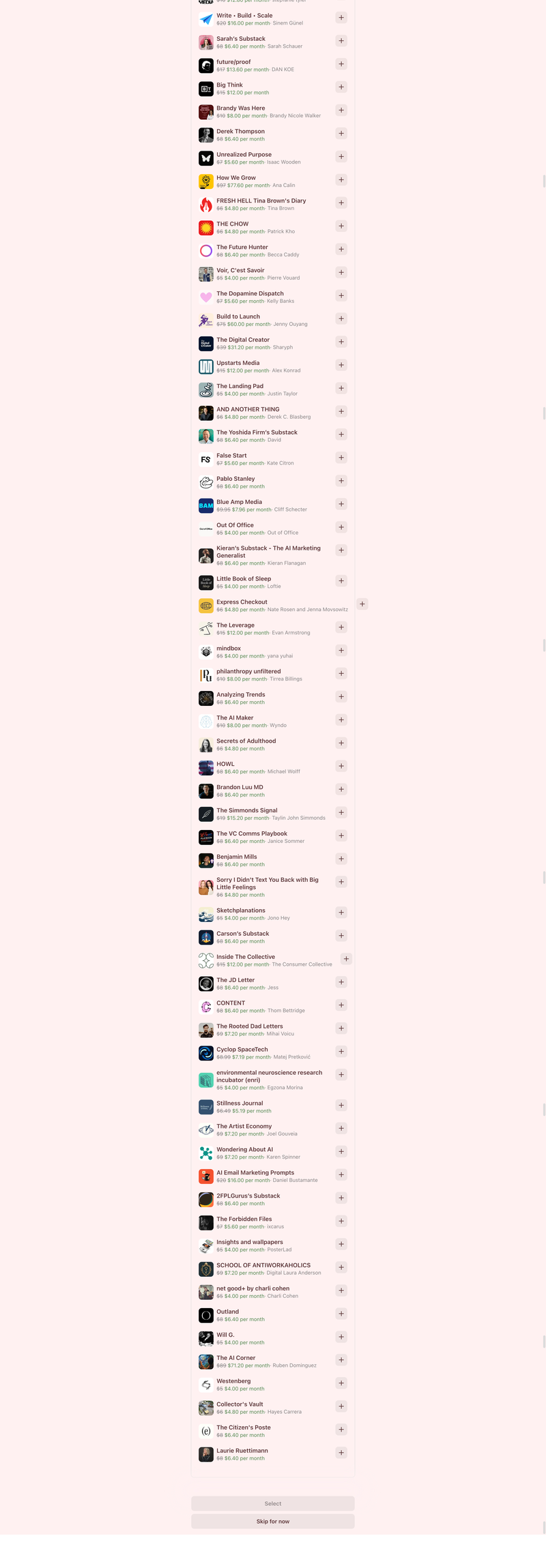
One subscription. All of this.
Substacks discounted from a single subscription. One click. One writer. A hundred strangers.
The pitch is "get a discount." As if the problem was cost, not time. As if what we needed was more to read, not less.
How we got here
Everyone is a subscription now
Writers, coaches, analysts, designers, therapists, chefs. Substack turned individuals into recurring revenue. Patreon did it for artists. Buy Me a Coffee did it for everyone else. We're not subscribing to publications anymore. We're subscribing to people. Your favourite writer is now a SaaS product with a churn rate.
I didn't subscribe to consume. I subscribed to support. We've invented tipping culture for writers.
The subscription isn't a transaction. It's a thank you.
Most paid Substack subscribers aren't paying for exclusive content. They're paying because someone's free work was good enough to deserve it. The subscription is a gesture. A tip jar for the internet. And that changes the economics entirely, because the product isn't the paid tier. The product is gratitude.
per month. That's what it costs if you subscribed to just 10% of the discount list at £4 each. On newsletters alone.
Gym memberships for your inbox
How many paid Substack subscribers never open a single email? The ghost subscriber problem is real. You signed up to support someone, then life happened. The emails pile up. You feel guilty. You don't unsubscribe because it feels like withdrawing a compliment. It's the gym membership model applied to reading. You're paying for the idea of yourself as someone who reads.
The cross-promotion loop
Person A promotes Person B. Person B promotes Person C. Person C promotes Person A. Everyone promotes everyone. That discount wall isn't editorial curation. It's referral culture dressed up as generosity. Subscribe to one writer and you're instantly inside a network of mutual promotion that has nothing to do with quality and everything to do with reach.
active Substack subscriptions. The average person reads four newsletters regularly. Do the maths on that ratio.
The newsletter is the new LinkedIn bio
Half the people on that discount wall aren't building media businesses. They're building career positioning. The newsletter is the new personal brand. The subscriber count is the new follower count. "I write a Substack" has become what "I have a TED talk" was in 2015. A credential, not a publication. The subscription isn't the business model. The reputation is.
We left social media algorithms to find human voices. Now those voices are algorithmically cross-promoting each other.
Email was supposed to be the exit. It became the entrance.
Substack started as "email, but better." Direct to reader. No algorithm. No feed. Now look at it. Notes. Recommendations. Restacks. Chats. Group threads. They're slowly rebuilding the social feed they promised to replace. The platform play is always the same: start with utility, end with attention capture. We've seen this film before.
The discount wall is survival, not strategy
The vast majority of Substack writers earn very little from subscriptions. That cross-promotion wall isn't a curated recommendation list. It's a growth hack for people trying to make rent from writing. They're trading audiences with each other because organic discovery on the platform barely exists. It's mutual aid disguised as editorial endorsement.
The subscription stack
The average household now pays for streaming, software, cloud storage, music, news, fitness apps, meal kits, and newsletters. Layer them up and you're looking at hundreds of pounds a month in recurring charges. Every service that used to be a one-off purchase now wants a monthly relationship with your bank account. We didn't sign up for this. Actually, we did. Repeatedly.
We unbundled cable TV. Then we rebundled it into streaming. We unbundled newspapers. Now we're rebundling them into Substack discount walls.
Who wins? Platforms. Always platforms.
Substack takes 10% of every paid subscription. Stripe takes another 2.9%. The writer gets what's left. The cross-promotion network drives more subscriptions, which means more platform revenue, regardless of whether anyone reads the content. Sound familiar? The creator economy's dirty secret is that the infrastructure always eats the content. The pipes always beat the water.
When everyone is a subscription, who has time to be a subscriber?
We'll need curators of curators
The subscribe-to-everyone economy creates its own demand for filtering. Someone needs to read all of this so you don't have to. Someone needs to surface the three newsletters that actually matter this week from the three hundred competing for your attention. The next valuable layer in media isn't creation. It's editorial selection at scale.
Taste becomes infrastructure
When supply is infinite, editorial judgement is the infrastructure. Not more content. Not more subscriptions. Not more discount walls. The ability to say "this is worth your time and this isn't" is the most valuable skill in the attention economy. Brands that help people choose what to pay attention to will matter more than brands that produce more content to pay attention to.
What if we subscribed to fewer people, but actually read them?
Attention is the only subscription that costs something you can't earn back
You can cancel Netflix. You can unsubscribe from a newsletter. You can claw back the money. But you can't claw back the time you spent scrolling a discount wall of 100 strangers' Substacks, trying to figure out which ones might be worth it. The most expensive subscription isn't the one that charges your card. It's the one that charges your attention.
This is what I build
Every product I've shipped is a filter. CultureTerminal monitors 400+ cultural signals so you don't have to. The Relevance Index scores what actually matters this week. Oishii London picks the restaurants worth your time from thousands. The Pattern surfaces the cultural shifts brands need to see. The future of the subscription economy isn't more content. It's someone with taste deciding what deserves your attention.
Subscription fatigue is already correcting this. The average consumer now manages 12+ subscriptions and is actively cutting. The model that turned every person into a product will hit the same wall that turned every product into a subscription: people run out of budget before they run out of interest.
The future isn't more subscriptions. It's better filters. Or fewer choices.
If everyone is a subscription, then taste becomes the filter that decides who you pay for. The subscription economy needs curation to survive. Andjelic's aspiration economy provides the framework for that curation.
This is where we are. The question is where we go next.
The future isn't more subscriptions. It's better filters. Fewer voices, chosen with more care. Quality over quantity. Depth over breadth. The people who help us choose will matter more than the people who ask us to.

Thank you.
mikelitman.me · hello@mikelitman.me